

Specialized AI for
cloud exploit validation
Mirror how today's attackers operate end to end.
Continuously monitor and chain live cloud changes into real attack paths. AI security that proves what works through security validation, not alerts.


Trusted by









Security teams see the noise, but attackers see the paths
Detection tools guess at risk. As AI compresses time to exploit,
probability is no longer enough. Move beyond visibility toward proof.


How OFFENSAI AI security validates real cloud attack paths

Model
Create a living representation of how your cloud can actually be abused. OFFENSAI builds an attacker-grade model of your cloud environment, mapping identities, permissions, services, and trust relationships.
Beyond alerts. Built for proof.
OFFENSAI stress-tests your detections with evasive attack execution, exposing the coverage gaps alerts never show.
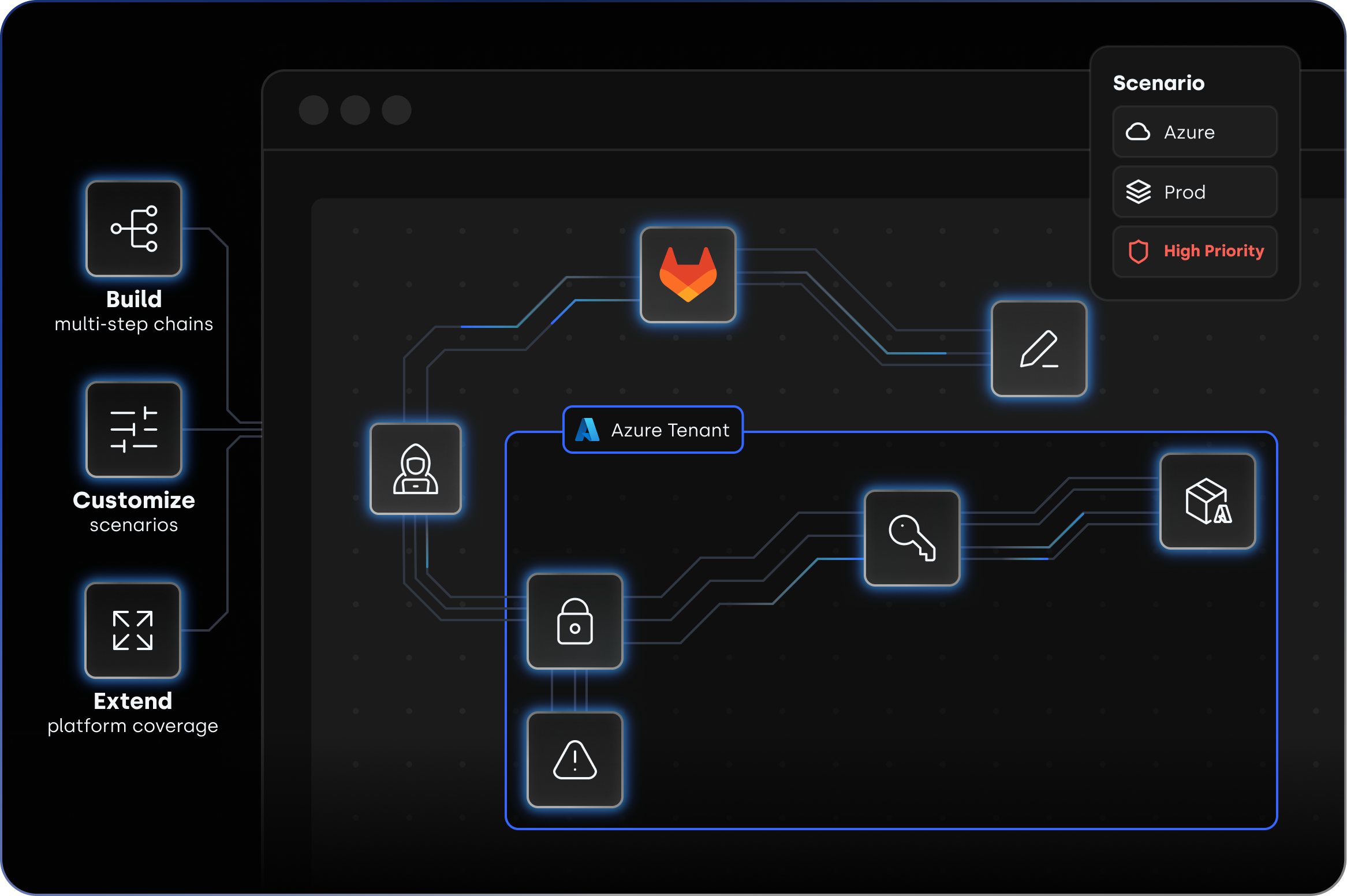
Generative attack engine
Create new attack path variations across APIs, identities, and service relationships, beyond static rules and replayed scripts.
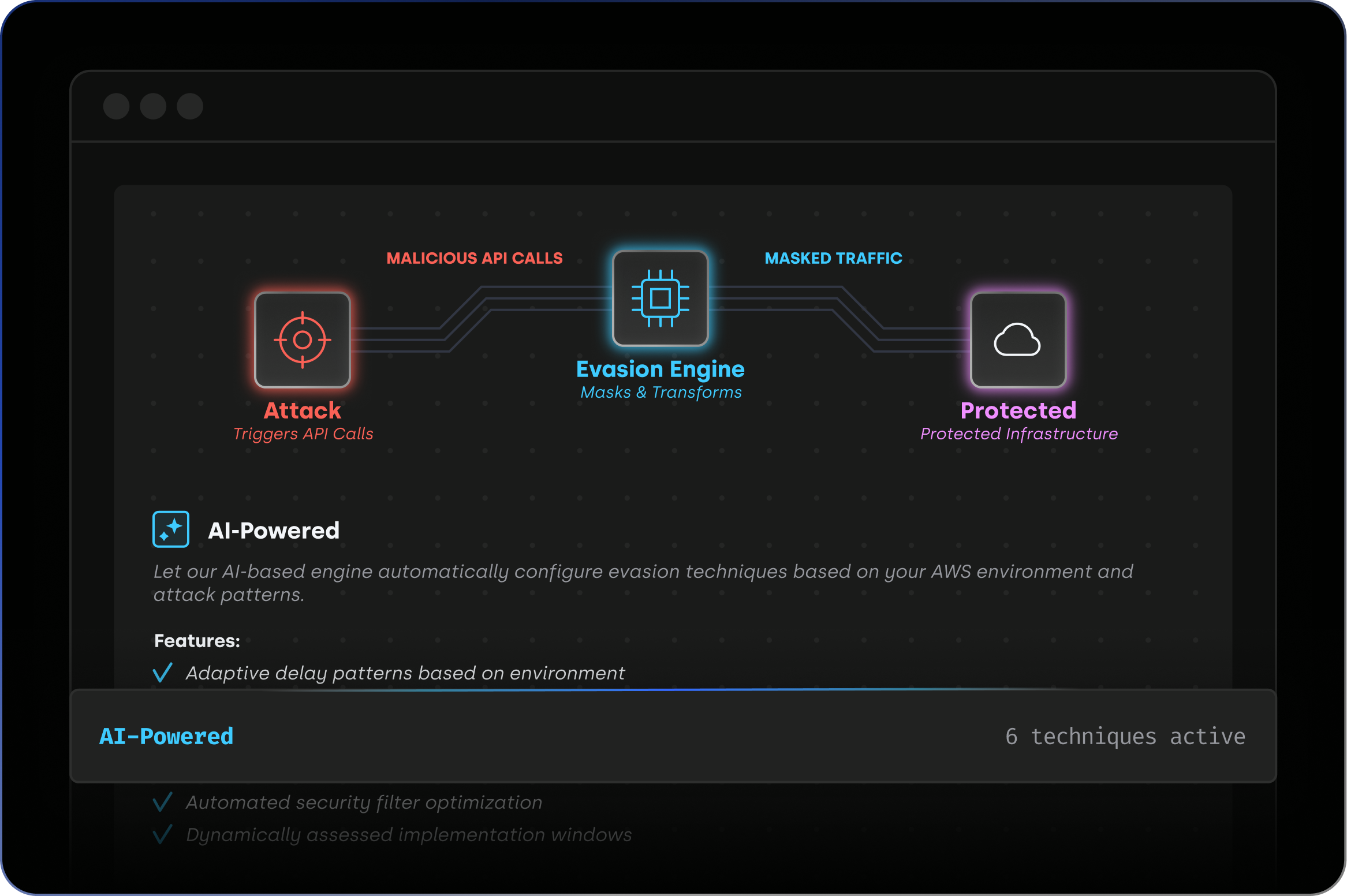
Configurable evasion engine
Assess how controlled validation behaves against existing detections using configurable low-noise execution strategies.
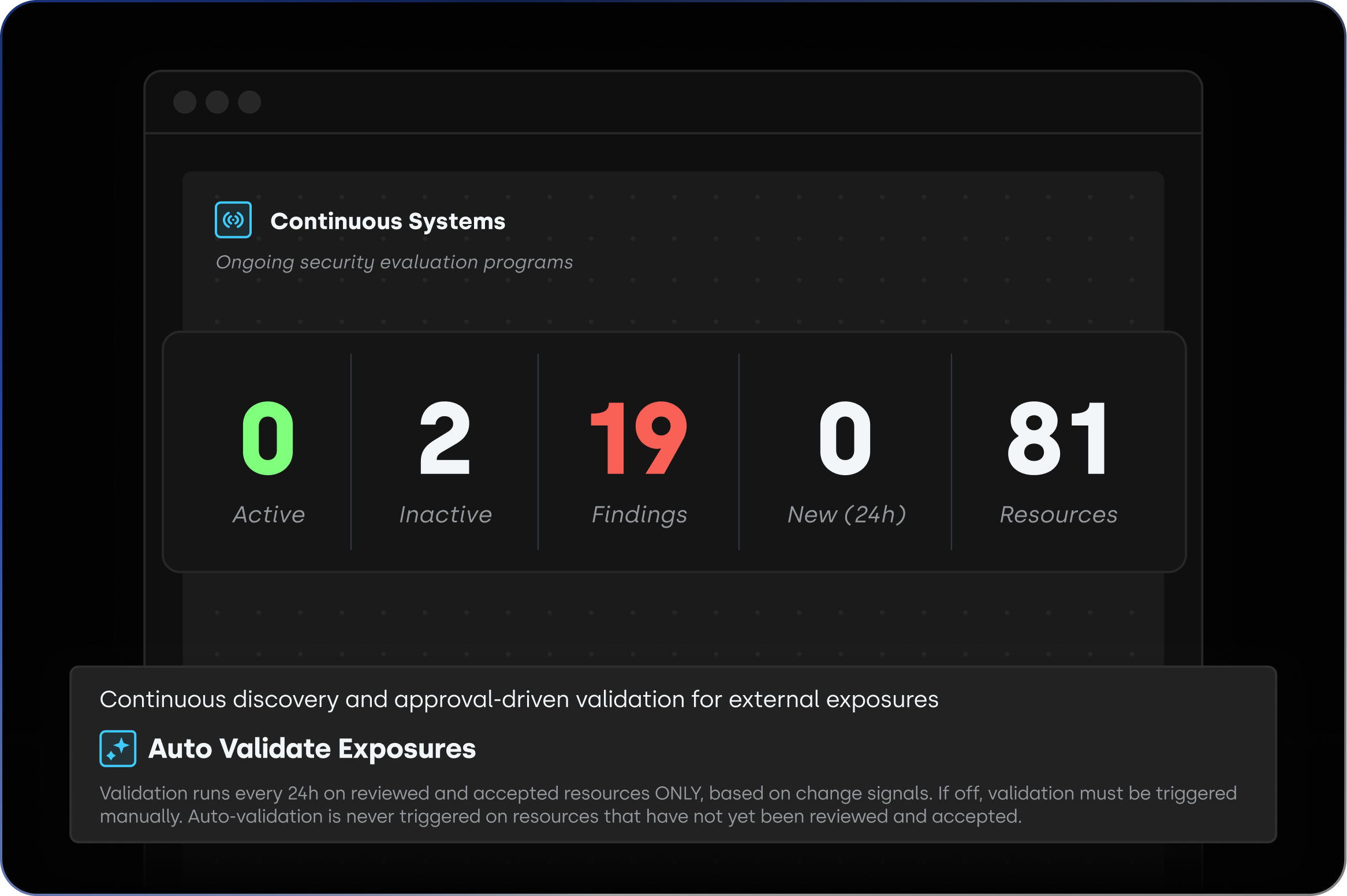
Comprehensive continuous testing
Continuously validate cloud exposure from both inside and outside the environment as infrastructure, identities, and permissions change.
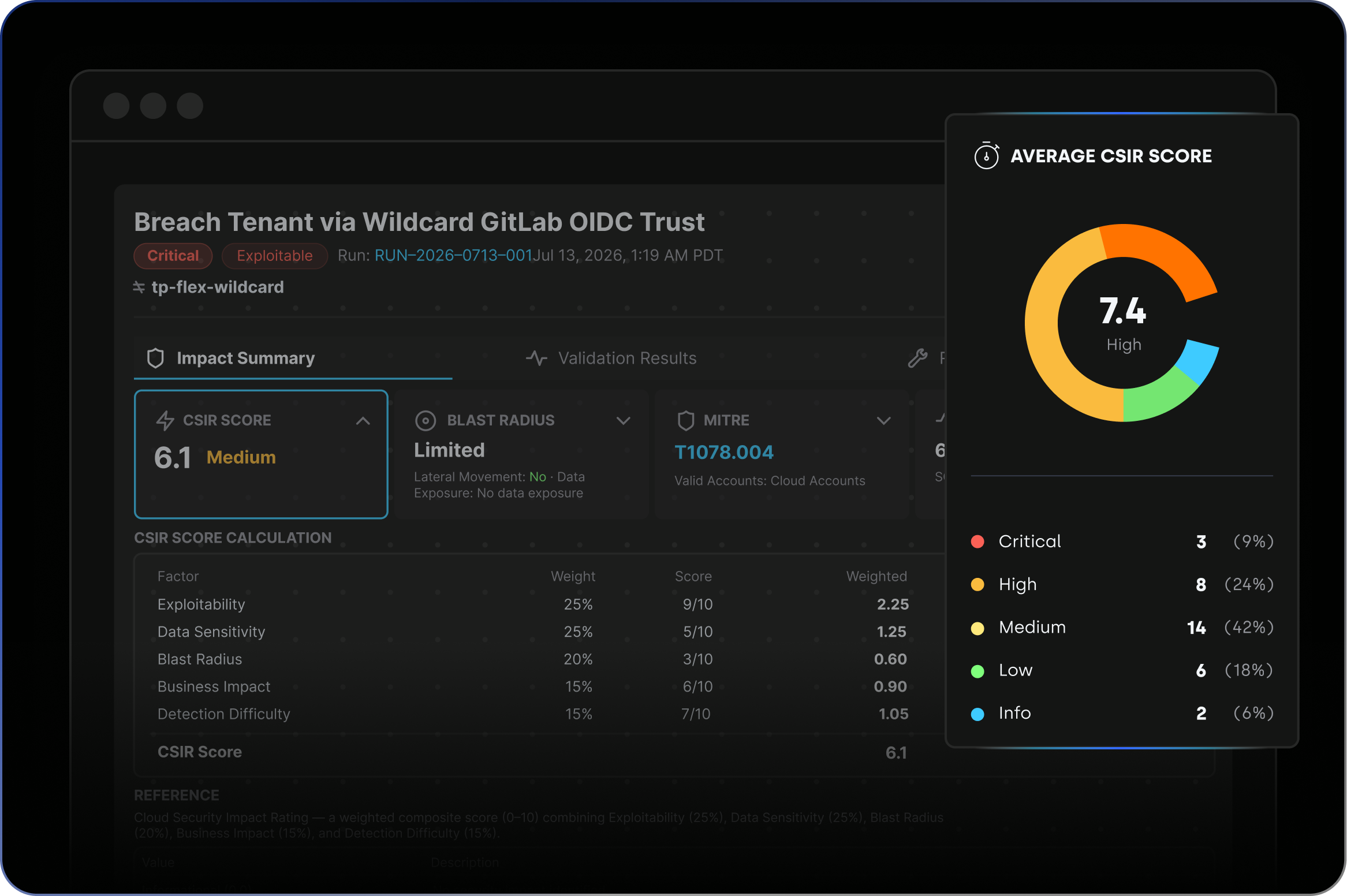
Evidence-driven results and prioritization
Every validated finding includes technical evidence, affected assets, and clear remediation guidance.
Generative attack engine
Create new attack path variations across APIs, identities, and service relationships, beyond static rules and replayed scripts.


ATTACKSTUDIO™
Visually compose custom validation chains
that reflect unique cloud architectures,
threat hypotheses, and organization-
specific security priorities.



OFFENSAI cloud security validation you can trust

Human-initiated by design
Validations are only run on your approval.

Data sovereignty by design
Clouds connect via native APIs. Read-only access, no host agents to deploy.

Audit-ready output
Validated findings are structured for review and reporting.

Actionable remediation
Clear evidence and guidance, not just detection output.

Shift happens.
Be ready when it does.
Move from cloud exposure detection to controlled validation, technical evidence, and risk-based prioritization, powered by AI.


FAQs
What is cloud security testing?
Cloud security testing is the practice of actively validating whether misconfigurations, excessive permissions, and exposed services in cloud environments can be chained into real attack paths. Rather than listing potential issues, it proves which ones an attacker could actually exploit to reach sensitive data or escalate access across AWS, Azure, and GCP.
What is autonomous cloud security testing?
Autonomous cloud security testing uses AI to continuously execute real attack chains against a live cloud environment without manual red team effort. Unlike scanners that report misconfigurations, it proves which vulnerabilities are actually exploitable by chaining them into full breach scenarios across AWS, Azure, and GCP.
What is Adversarial Exposure Validation (AEV)?
Adversarial Exposure Validation (AEV) is a Gartner-defined security category that moves beyond detection to prove which cloud exposures are actually exploitable. AEV platforms execute real attack chains, validate findings end-to-end, and score risk by business impact rather than theoretical severity.
How is cloud security testing different from CSPM?
CSPM tools passively surface potential misconfigurations but never prove whether those exposures are exploitable. Cloud security testing is active: it executes real attack chains to show exactly which misconfigurations chain into a breach. Most teams use both, with cloud security testing providing execution-level proof of what actually matters.
Why do cloud security teams need attack path analysis?
Attack path analysis maps how an attacker chains IAM permissions, service trusts, and identity relationships to move laterally through a cloud environment and reach sensitive resources. Without it, security teams are left prioritizing thousands of isolated findings with no understanding of which ones combine into real threats.
Does cloud security testing disrupt production environments?
No. Modern cloud security testing tools and platforms connect via least-privilege, read-only IAM roles and perform zero destructive actions. They simulate what an attacker could do by observing and chaining exploitable paths, without modifying, deleting, or disrupting any production workloads, data, or infrastructure.
How should security teams prioritize cloud vulnerabilities?
Severity scores alone do not reflect real risk. Effective prioritization requires understanding which vulnerabilities chain into exploitable attack paths and weighing them by data exposure, detection difficulty, attack complexity, and business impact rather than relying on theoretical CVSS ratings.
How does cloud security testing support compliance frameworks?
Cloud security testing maps executed attack chains to compliance frameworks like MITRE ATT&CK, SOC 2, ISO 27001, NIST CSF, and GDPR. Each report documents which controls were validated through real simulated attacks, replacing manual spreadsheet evidence with automated, audit-ready proof.
What is the difference between cloud penetration testing and autonomous cloud security testing?
Traditional cloud penetration testing is a periodic, point-in-time engagement that becomes outdated after your next deployment. A continuous cloud security testing platform runs attack simulations daily and adapts as your cloud changes so your security validation stays current.
Does cloud security testing work across AWS, Azure, and GCP?
Leading cloud security testing tools natively support AWS, Microsoft Azure, and Google Cloud Platform, executing attack chains across all three simultaneously with no agents, no infrastructure changes, and no disruption to production workloads.