
External attack validation
Start from the outside, with no credentials required.
Map what adversaries can discover, enumerate, and exploit using only public signals, then validate which exposures actually put your cloud at risk.

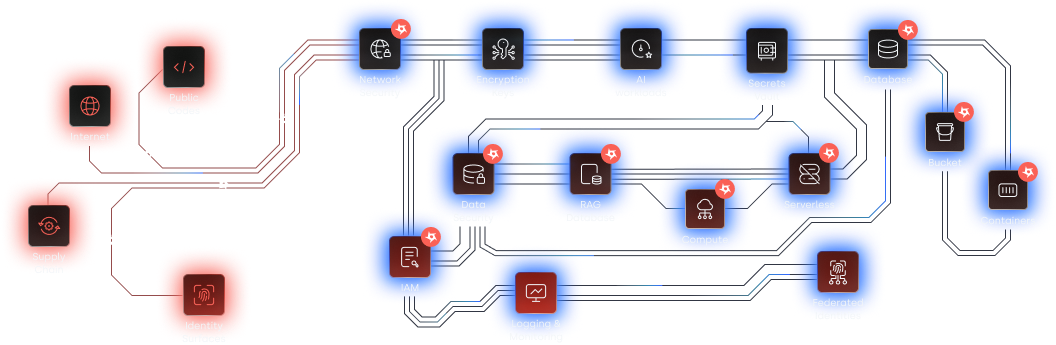
Why cloud exploitation demands specialized validation

Technique-level coverage

Evidence that supports compliance

Threat-informed by default
From external recon to proven exposure
Map your external attack surface using open-source signals, then validate which paths can actually be exploited through controlled, real attack execution.
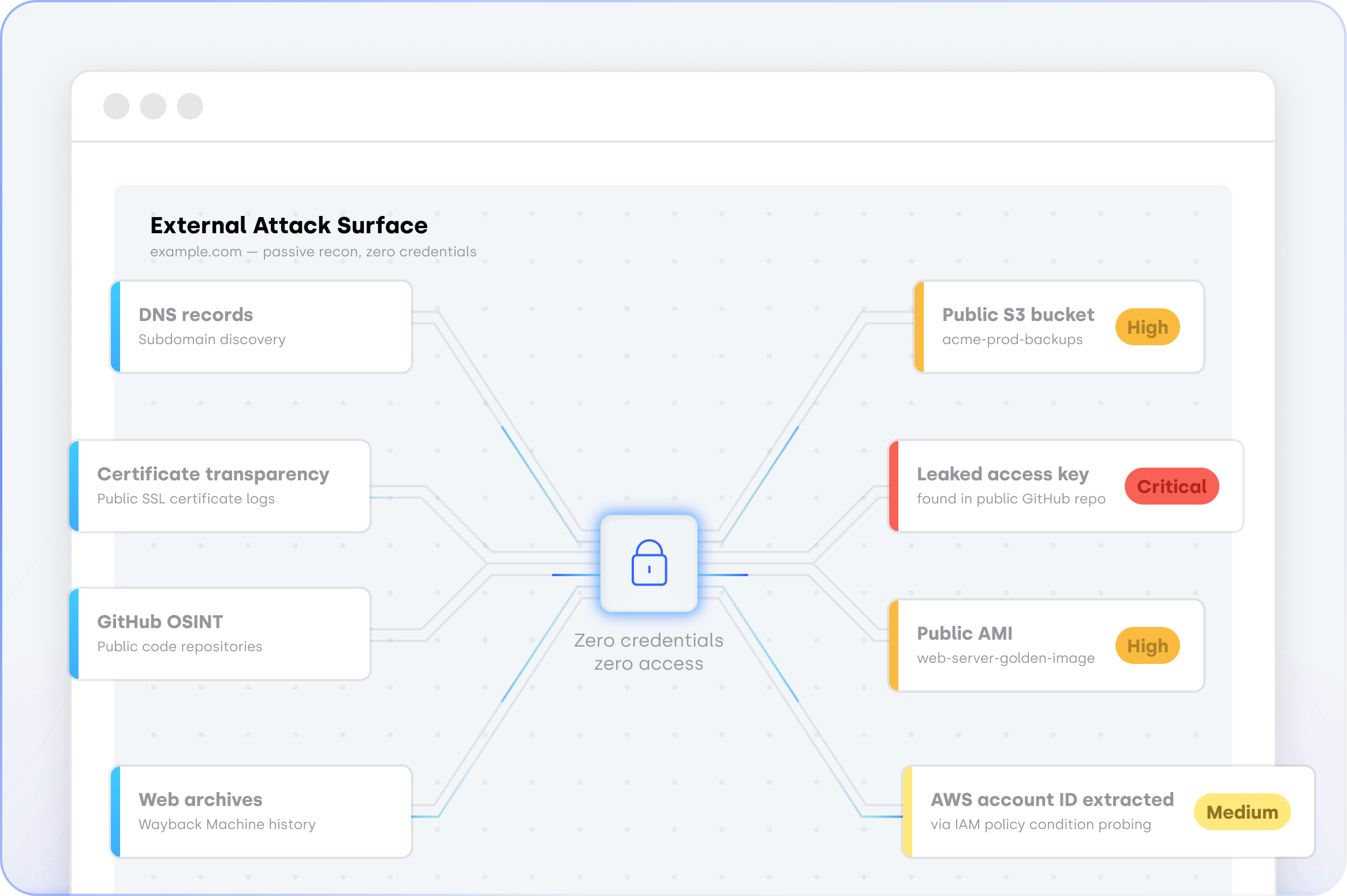
External attack surface mapping
See what attackers can see, before they act. OFFENSAI uses OSINT to map your exposed cloud footprint from domains, code repositories, and public records, giving you a complete view of externally discoverable infrastructure without credentials.
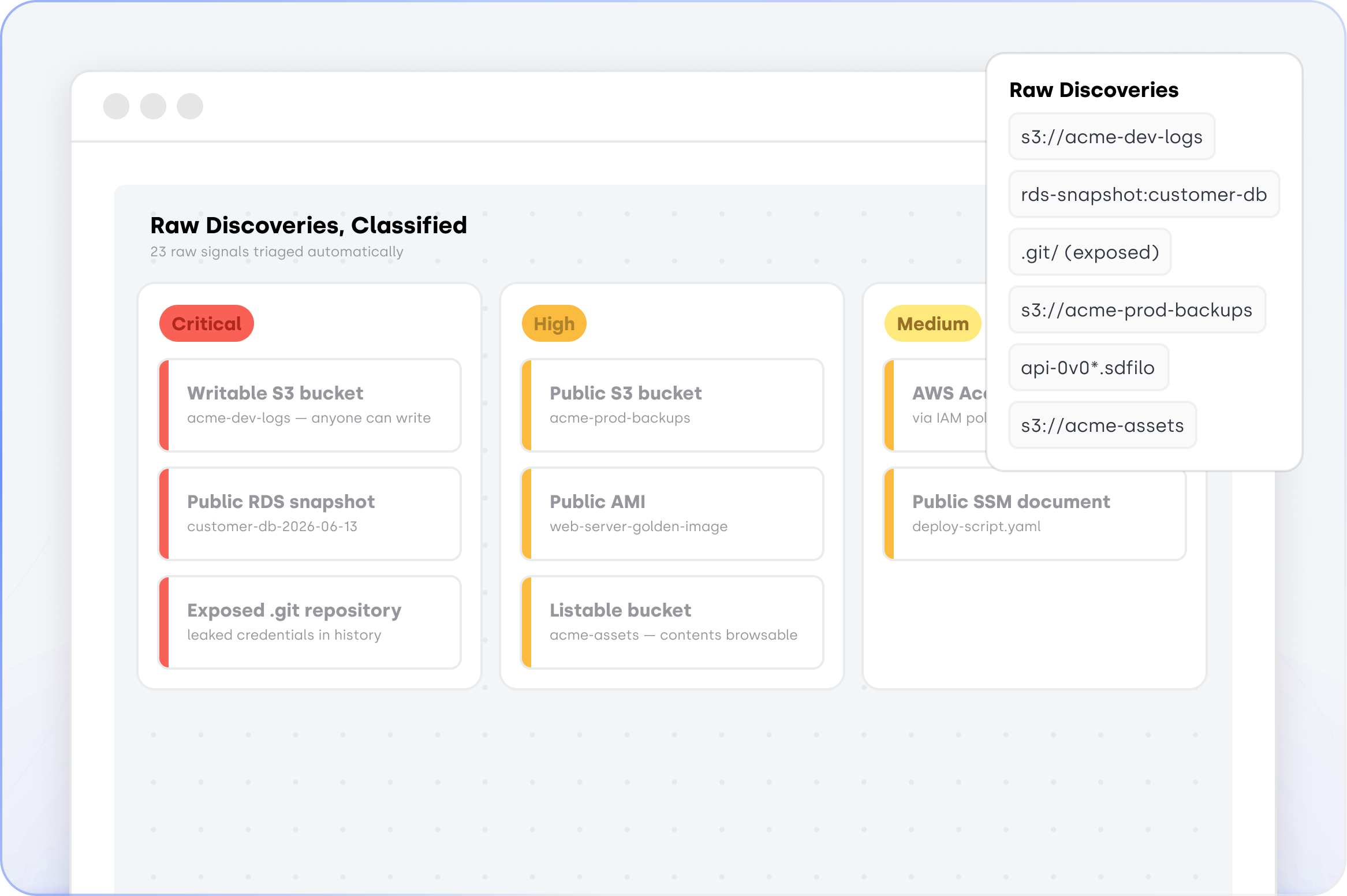
Automated resource discovery and enumeration
Uncover hidden cloud assets and their risk in minutes. OFFENSAI identifies buckets, accounts, and public cloud resources, then classifies their exposure so teams can quickly understand where real risk exists.
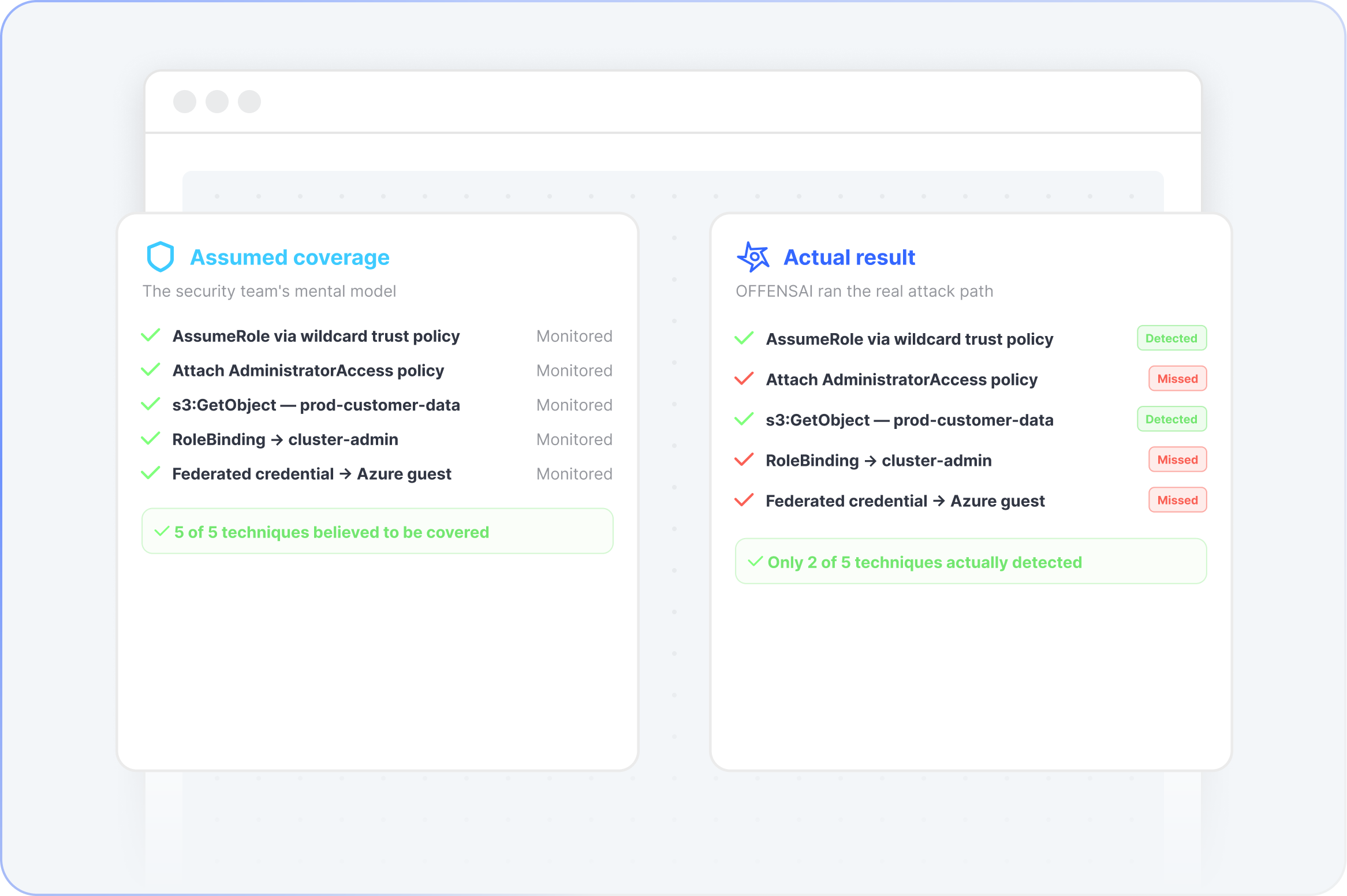
Recon-to-exploit validation
Understand what your security stack really sees. OFFENSAI tests real attack paths against your detections to expose blind spots, missed signals, and gaps between assumed and actual coverage.
Start from the outside
Begin with a domain, account ID, or bucket and run reconnaissance using only public signals, no credentials required.
Expand the attack surface
Use OSINT to uncover subdomains, cloud resources, and leaked infrastructure references attackers can discover.
Enumerate and classify exposure
Identify public cloud assets across accounts and assess their real-world risk and attacker value.
Validate real attack paths
Chain findings into realistic attacks and run controlled validation to prove which exposures lead to impact.
Start from the outside
Begin with a domain, account ID, or bucket and run reconnaissance using only public signals, no credentials required.
Expand the attack surface
Use OSINT to uncover subdomains, cloud resources, and leaked infrastructure references attackers can discover.
Enumerate and classify exposure
Identify public cloud assets across accounts and assess their real-world risk and attacker value.
Validate real attack paths
Chain findings into realistic attacks and run controlled validation to prove which exposures lead to impact.
OFFENSAI cloud security validation you can trust

Human-initiated by design

Data sovereignty by design

Audit-ready output

Actionable remediation

Shift happens.
Be ready when it does.
Move from cloud exposure detection to controlled validation, technical evidence, and risk-based prioritization, powered by AI.